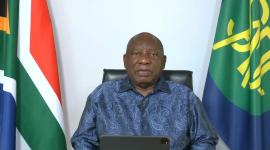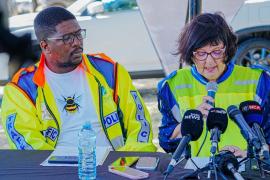
The Department of Transport’s mid-term festive season preliminary road safety report shows a decline in road fatalities compared to the same period last year, with 113 lives saved.
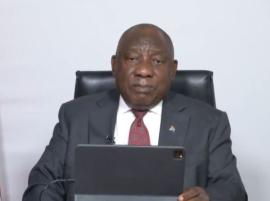
“The number of fatal crashes last year this time was 545, compared to the 431 we have seen this year. The fatal crashes took 638 lives last year this time compared to 505 persons this year,” Minister of Transport, Barbara Creecy, said on Friday.
Addressing a media briefing in Cape Town on the preliminary report of the 365 Days Arrive Alive Road Safety Campaign for the 2025 festive season, Creecy said preliminary reports indicate a 20.9% reduction in fatal crashes and 20.8% reduction in fatalities in the middle of December (December 1 -16) following intensified law enforcement, road safety education, and public messaging.
The Free State has been identified as the best performing province, managing to bring down major crashes from 40 last year this time to 19 this year, while road deaths were brought down from 61 to 20.
This translates to a 67.2% decrease in fatalities.
“While Gauteng was able to bring down crashes by 12%, it remains the highest contributor to the death toll. In Gauteng, 105 people were killed in 95 crashes, with 88 fatalities in KwaZulu-Natal from 85 crashes,” the Minister said.
The Western Cape recorded 66 deaths in 55 crashes in the first half of December.
The Eastern Cape recorded 52 fatalities in 45 crashes, Mpumalanga has 69 fatalities in 50 crashes, North West has 34 deaths in 28 crashes, Limpopo has 40 road deaths in 34 crashes and Northern Cape 31 road deaths in 20 crashes.
Despite strong enforcement, two provinces recorded increases in fatalities year-on-year. They are Mpumalanga and Northen Cape, illustrating that behavioural risk remains “stubbornly high”.
“The average fatalities per day is 32. which is the lowest in five years. The top four types of crashes that contributed to the high number of fatalities are accident with pedestrian, hit and run, single vehicle overturned as well as head-on collisions.
“However, pedestrians continue to represent a disproportionately large share of the road toll, underscoring the ongoing vulnerability of non-motorised road users. The contribution of pedestrians to fatalities is 44%, passengers contributed 28%, drivers contributed 26%, and cyclists contributed two percent (2%).
“These preliminary figures remind us that danger remains ever present, and the peak travel days of Christmas and New Year are still ahead. Heavy traffic volumes are expected on the roads this weekend leading to Christmas and New Year’s Day.
“Traffic volumes and congestion will be experienced again in the first weekend of January as many holiday makers will be making their way back to the cities for the re-opening of schools and return to work,” the Minister said.
Creecy said the mid-season shows that enforcement is having an impact on incident rates, but fatal crashes are still occurring at unacceptable levels.
“Alcohol misuse, speeding, fatigue, and unsafe pedestrian behaviour remain the dominant risk factors. Heavy rainfalls and thunderstorms in the period under review also had a devastating impact on our campaign.
“These patterns emphasise that law enforcement and infrastructure improvements alone are not enough. They must be paired with sustained behavioural change — the core message of our 365 Days of Road Safety commitment,” the Minister said.
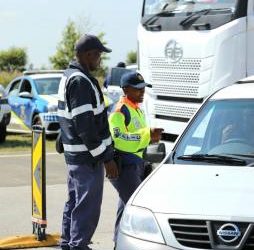
In the coming days, government will maintain a 24-hour high visibility patrols on highway and secondary routes. – SAnews.gov.za