As we bask in the holiday spirit and festive cheer, our collective reflection at the sunset of 2025 should also acknowledge how far democratic South Africa has come.
While spending time with family and loved ones is a hallmark of the December break, it is also a time at which the country commemorates Reconciliation Month which, includes Reconciliation Day.
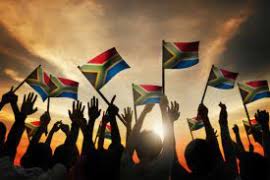
Today, the nation marks National Reconciliation Day to promote social cohesion, healing, unity and nation-building.
Commemorated since December 1995, Reconciliation Day and Reconciliation Month aim to promote reconciliation and national unity. Although the terms “nation-building” and “social cohesion” form part of our everyday vocabulary, they are more likely to be used more at this time of the year, when the country reflects on its painful apartheid past.
December is also the month that saw the country’s first democratically elected President, Nelson Mandela, sign the Constitution of the Republic of South Africa into law on 10 December 1996. The Preamble of the Constitution refers to “build[ing] a united and democratic South Africa able to take its rightful place as a sovereign state in the family of nations”.
But what exactly is nation-building?
“Nation-building imagines South Africa at a grand level, and we try to develop a certain sense of national identity. That kind of national identity is drawn from different elements. If you look at Japan or Sweden, for instance, they largely speak the same language, and largely have the same culture, although Sweden has a few other elements, such as indigenous people.
“At one level you can build a nation around what they call a core-ethnic identity and that becomes the Japanese national identity. On the other hand, the school I belong to is called a constructed national identity. This isn’t only in Africa or post-colonial countries.
If you look at even France and Italy, for the longest of time, there wasn’t a thing called France or Italy. You had these different principalities of provinces. Then there was the Italian unification movement that created Italy. The leader of that movement famously said that ‘now that we have created Italy, let us create Italians,’ because until then, people saw themselves as Neapolitan. So that’s a constructed identity,” Dr Yacoob Abba Omar said in an interview with SAnews.
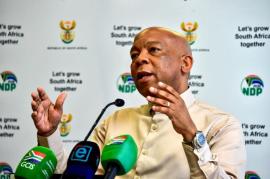
Omar, who is an expert on national identity and sovereignty, is one of the commissioners of the National Planning Commission (NPC). The Commission is an independent advisory body and think tank appointed by the President. The Commission is also the custodian of South Africa’s National Development Plan (NDP): Vision 2030.
“In our case, the Constitution, the (national anthem), sports teams and our heraldry are part of building the nation,” he said.
Omar described social cohesion as an individual’s day- to-day experiences of other people.
“Social cohesion is a tougher one, It is your day-to-day experiences of other people, and it is not just South Africans. You live with migrants, tourists and all kinds of people and you try and develop social cohesion.
“Social cohesion happens at the most grassroots levels, It happens at the individual level. It happens in the learning of another South African language, for example. So, it’s at an individual and at a community level, and obviously it impacts the national level,” he explained.
He added that the nation-building project at a national level reinforces social cohesion at community and individual levels.
Mixed bag
He added that South Africa’s social cohesion efforts are somewhat of a mixed bag.
“I think it’s a mixed bag in many ways. At one level, the fact that we’re still together as a country is very important. Let’s not underplay the importance of that because remember when the Constitution was adopted, there were so many people that wanted to split the country up into an independent Western province and that kind of thing.
“I’m not saying those threats have gone away. They are still there, but we are still together as a country, and I think that’s a good starting point. But in reality, there’s a lot of work to be done. We still have basic things [like] the inequality we are still facing.”
“The lives of Black people haven’t improved as much as we would have liked – the gap has just increased ever-more. Obviously White, and I think a lot of Indian people, have been enjoying the fruits of democracy. Black people, especially black women and Coloured people, still find themselves in the lower levels of society on average, educationally, [and] income-wise as an indicator,” he said.
He added that while some are of the view that the country will not attain social cohesion due to “such deep inequalities,” there remains a “South African-ness that we can appeal to.”
“In a nutshell, social cohesion is a work in progress,” he said.
TRC and inquests
While South Africa has been lauded for its transition to a democratic dispensation, Commissioner Omar said that the issue of apology for the atrocities of the past is something that the country must still confront.
“One of the themes … we have not really looked at as South Africa is and, in a sense, the TRC [Truth and Reconciliation Commission] tried to address, is, the whole notion of apology. You find countries like New Zealand, Australia and even in the UK and to the point where even King Charles now issued an apology for all the crimes that were committed in the name of British colonialism.
“There was a truth and reconciliation process that people are still critical of. The perpetrators of all of the brutality of apartheid have escaped justice, so we still have to deal with that one. Then we have to deal with whether we should be pushing forward for transformative apology where you don’t just say I’m sorry for what I did, but you do something about it and not just leave it at that,” he explained.
Dr Omar said that while the TRC has made progress, more needs to be done.
“We need to acknowledge that quite a bit did happen as a result of the TRC, but again it’s still not enough,” he said.
Earlier this month, the Presidency announced the extension of the deadline for the Judicial Commission of Inquiry into allegations of attempts to halt the investigation or prosecution of TRC cases. In May, President Ramaphosa signed a proclamation establishing the commission. The commission’s new deadline is 31 July 2026.
Meanwhile, in May 2024, government announced the reopening of inquests into the deaths of prominent anti-apartheid activists, including Chief Albert Luthuli who was said to have been struck down by a train. However, in October this year, the KwaZulu-Natal High Court set aside the 1967 inquest finding into Luthuli’s death, ruling that Luthuli was beaten to death.
“I don’t have a problem with these inquests being opened, even the Luthuli inquest. As much as it is so far back, but you know how important that kind of closure is for African families and culture. All those things are fundamentally important to our people’s culture. That is so critical for anyone’s culture,” Omar said.
In September, the National Prosecuting Authority (NPA) announced that it was reopening the inquest into the death of anti-apartheid activist and Black Consciousness Movement founder and leader, Stephen ‘Steve’ Bantu Biko.
He added that there’s a need to look at the “issues of reparation, especially post-TRC,” as well as the land question in terms of restoration.
National Dialogue
Recently, the Minister of Sport, Arts and Culture Gayton McKenzie emphasised that while government can create platforms for dialogue, healing and nation-building, the real work belongs to the people themselves.
“Government can open the space for engagement, but reconciliation is a responsibility that rests with every South African. Our mission now is to build a future where our children inherit unity, not division,” the Minister said.
This comes as the country has put in motion the National Dialogue process which the Presidency has described as a call to action for citizens to lead an inclusive dialogue on the challenges facing the country.
The process was preceded by the first National Convention which laid the groundwork and set the agenda for the dialogue in August.
The Commissioner said that nation building has several facets to it.
“Nation-building has many dimensions, so one [aspect] is the very practical, concrete basic services. At another level, there’s the whole thing of identifying with the nation. People take pride in being South African and I think that is an important basis for the country. That’s why for me; the National Dialogue is important.
“The National Dialogue is an important moment for all of South Africa to come together and say this is the kind of South Africa we want. We have had 30 years of this democracy, we can look forward to another 30 years of building this new South Africa,” he explained.
The NDP envisages that by 2030, South Africa will have made significant progress towards achieving social cohesion. The NPC has previously expressed its concern that insufficient progress has been made in attaining social cohesion and nation building.
“At a level, some people use indicators like delivery on health, housing, education as indicators of us having moved on the pathway to social cohesion. We’ve run up access to basic health, access to education is 100%. We also probably had one of the most ambitious housing projects in the world with the RDP [Reconstruction and Development Programme] project. But the quality of a lot of these services now remains to be improved.”
The Commissioner further added that the nation-building project is an ongoing process that continually redefines itself and comes together at different moments.
“Nation-building happens no matter what the government decides, no matter what is happening,” he said.
While our country is by no means perfect, South Africans have the ability to overcome challenges to see the sun rise again. – SAnews.gov.za