
Press Nest Africa

Menu
  • Home
  • News
  • Business
  • Political Press
  • Government
  • NGOs
  • BRICS Forum
  • Voices / Opinions
Home News

Christmas trees are more expensive than ever in Colorado — what gives?

Africa Biz Watch by Africa Biz Watch
December 15, 2025
Christmas trees are more expensive than ever in Colorado — what gives?
Share on FacebookShare on Twitter

All festive products are getting more expensive. d3sign/GettyImages

The holiday season sparks a significant increase in consumer spending. This year, Black Friday alone saw consumers shell out a record US$11.8 billion. It’s the time of year when many Americans make purchases to decorate for the holidays — lights, ornaments and Christmas trees.

If you bought a Christmas tree in Denver this year, you may have noticed a pretty steep price tag. It turns out that all festive products are getting more expensive, and that includes Christmas trees, both freshly cut and artificial.

RelatedPosts

The 27th Mountain Emei Ice, Snow & Hot Spring Season Invites Global Visitors to “Enjoy Winter Fun”

Cheers to New Beginnings: Carlsberg Hong Kong Launches No & Low-Alcohol and Beyond Beer Series for Conscious Celebrations

GEELY Opens World’s Largest Vehicle Testing Centre, Meeting the New Benchmark in Global Automotive Safety

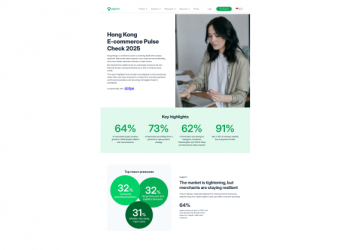
Optimistic Hong Kong Ecommerce Merchants Report Growth, But Hidden Payment Friction Is Eroding Up to 10% of Revenue, Aspire Report Finds

I study the psychology of consumption at the University of Denver. I’ve always been curious about how people make financial decisions under certain circumstances, including around the holidays. Christmas trees are an interesting case study.

What’s driving the increase

The cost of real Christmas trees is directly impacted by a long production cycle and transportation costs, particularly for landlocked markets like Denver.

Christmas trees take 7 to 10 years to grow. Currently, supply is tight, pushing tree prices up, which is a direct and delayed consequence of reduced planting rates that followed the Great Recession – which began in late 2007. This planting deficit effectively drove up wholesale prices and doubled the average price of pre-cut trees over the past decade after adjusting for inflation.

Raising tiny tree seedlings to a marketable size is a fraught business. Growers are exposed to a decade of weather, labor and pest risks, which increases the financial uncertainty of any planting season. This long lead time has made the supply unpredictable, putting constant pressure on Christmas tree wholesale prices.

Aerial view of rows of trees on a farm.
Colorado gets some of its Christmas trees from North Carolina, which grows more than 26% of the Christmas trees in the U.S.
Allison Joyce/GettyImages

For Denver retailers, transportation adds disproportionately to the final cost, since most Christmas trees in Denver are brought in from the Pacific Northwest and North Carolina using long-haul freight.

A retailer in Denver must also cover local operational overhead, such as labor costs, storage and the rental of temporary sales lots, which increases prices by about 10% on average based on wholesale Christmas tree prices. This is especially true for large trees, those taller than 9 feet (2.74 meters), as they do not grow in Colorado. Having said that, there are Christmas tree growers in Colorado, and the Douglas Fir is native to Colorado and grows naturally throughout its mountains.

Psychology of Christmas tree purchase decisions

The choice between a pre-cut Christmas tree and an artificial one is classic behavioral economics, which is the combination of economics and psychology to understand how and why people behave the way they do in the real world. It involves a trade-off between two readily available choices.

One option offers an emotional appeal, while the second choice may have to do more with cost savings and perceived environmental impact.

Buyers of real trees are driven by pleasure, satisfaction and emotional fulfillment. Often, buyers of fresh-cut trees are driven by nostalgia and a desire to inhale the powerful scent. Depending on the qualities of the tree, like how long it keeps its needles, how stiff the branches are and how rare it is, Denver customers often spend between $50 and $870 annually on fresh-cut Christmas trees.

On the flip side, artificial tree buyers prioritize the ease of buying a tree at the store and then bringing it out of storage each year. These customers seek convenience, low maintenance and the ability to control how the tree looks from a product that can cost between $250 to $700 initially. Being a durable good, artificial trees are typically replaced only once every five years.

In 2025, however, the decision to buy an artificial tree may feel less rational. Retailers are raising prices by 10% to 15% due to tariffs.

A Christmas tree display inside a store next to a shelf of ornaments.
Artificial Christmas trees have a higher up-front cost than many real trees, but over time are more affordable.
UCG/GettyImages

The financial and environmental superiority of the artificial tree is dependent on how long a consumer plans to keep and use it.

The financial break-even point is reached only when the artificial tree is reused for at least five years. The environmental break-even point is higher — around 10 years — due to the carbon emissions from manufacturing and global shipping of artificial trees. Their carbon footprint can be up to 10 times greater than a properly disposed-of real tree.

Behavioral changes in consumption

What about a third option that may appeal to Coloradans’ love of the outdoors?
Choose-and-cut businesses invite customers to visit a farm to select their tree and cut it down themselves. The tree is no longer just something you buy — it is the center of an experience you share.

Advocates go so far as to argue that the outdoor farm environment acts as a therapeutic escape from the stressful holiday season.

A child with a pink hat and blue coat pulls a small tree through the snow by its trunk.
Choose-and-cut Christmas tree farms enhance profitability by transferring the high cost of harvesting labor directly to the customer.
Glenn Asakawa/GettyImages

For the grower, this model is a highly effective form of agritourism, which makes use of the farm environment to boost revenue. It dramatically enhances profitability by transferring the high cost of harvesting labor – which can run from $15,000 to $50,000 annually – directly to the customer as a labor of love. The purchase of a tree may be the main point of the visit, but growers can improve their bottom lines through the sale of profitable goods and services like wreaths, hot chocolate, food and carriage rides. Motivated consumers are willing to pay more for the experience and the opportunity to recreate a meaningful ritual.

If this option excites you, there are a couple of spots where you can cut your own tree in Colorado, including at the Arapaho and Roosevelt National Forests. Most of these places, however, require a permit to chop down a tree.

Read more of our stories about Colorado.

The Conversation

Ali Besharat does not work for, consult, own shares in or receive funding from any company or organization that would benefit from this article, and has disclosed no relevant affiliations beyond their academic appointment.


Source link

Related Posts

The 27th Mountain Emei Ice, Snow & Hot Spring Season Invites Global Visitors to “Enjoy Winter Fun”
Corporate News from Media OutReach Newswire

The 27th Mountain Emei Ice, Snow & Hot Spring Season Invites Global Visitors to “Enjoy Winter Fun”

December 16, 2025
Cheers to New Beginnings: Carlsberg Hong Kong Launches No & Low-Alcohol and Beyond Beer Series for Conscious Celebrations
Corporate News from Media OutReach Newswire

Cheers to New Beginnings: Carlsberg Hong Kong Launches No & Low-Alcohol and Beyond Beer Series for Conscious Celebrations

December 16, 2025
GEELY Opens World’s Largest Vehicle Testing Centre, Meeting the New Benchmark in Global Automotive Safety
Corporate News from Media OutReach Newswire

GEELY Opens World’s Largest Vehicle Testing Centre, Meeting the New Benchmark in Global Automotive Safety

December 16, 2025
Optimistic Hong Kong Ecommerce Merchants Report Growth, But Hidden Payment Friction Is Eroding Up to 10% of Revenue, Aspire Report Finds
Corporate News from Media OutReach Newswire

Optimistic Hong Kong Ecommerce Merchants Report Growth, But Hidden Payment Friction Is Eroding Up to 10% of Revenue, Aspire Report Finds

December 16, 2025
Singapore and Jiangsu Forge Strategic Partnerships to Grow Global Accounting Talent and Support Expansion of Regional Businesses
Corporate News from Media OutReach Newswire

ISCA Unveils Bold Plan to Future-Proof Singapore’s Small and Medium-Sized Accounting Practices

December 16, 2025
Corporate News from Media OutReach Newswire

Leeds Capital and MIO Trust Are Proud to Announce Their Collaboration on an AI‑Driven Multi‑Asset Trust Focused on Digital Assets and Precious Metals

December 16, 2025
Hong Kong Launches Its First Dental Innovation Incubation Programme
Corporate News from Media OutReach Newswire

Hong Kong Launches Its First Dental Innovation Incubation Programme

December 16, 2025
Japan’s Hokkaido University Strengthens International Engagement Ahead of Its 150th Anniversary
Corporate News from Media OutReach Newswire

Japan’s Hokkaido University Strengthens International Engagement Ahead of Its 150th Anniversary

December 16, 2025
Next Post
Hong Kong Joins the Nation in Commemorating the 80th Anniversary of Victory in the Chinese People’s War of Resistance

Hong Kong High Court Convicts Lai Chee-Ying of Collusion to Endanger National Security

SARB announces non-trading days | SAnews

SARB announces non-trading days | SAnews

Operation Shanela II nets over 300 suspects

Operation Shanela II nets over 300 suspects

Red Bull Malaysia Renews Partnership With 31 Racing, Maju Motor And CKJ Racing As 2025 PETRONAS MAM Malaysian Cub Prix Championship Concludes

Red Bull Malaysia Renews Partnership With 31 Racing, Maju Motor And CKJ Racing As 2025 PETRONAS MAM Malaysian Cub Prix Championship Concludes

Best way for employers to support employees with chronic mental illness is by offering flexibility

Best way for employers to support employees with chronic mental illness is by offering flexibility

Recommended.

Leading APAC Flexible Workspace The Work Project to Open First UK Location

Leading APAC Flexible Workspace The Work Project to Open First UK Location

March 24, 2025
Marking 30 Years of Excellence, EtonHouse International Education Group Pledges $3 Million to EtonHouse Community Fund to Strengthen Community Impact

Marking 30 Years of Excellence, EtonHouse International Education Group Pledges $3 Million to EtonHouse Community Fund to Strengthen Community Impact

August 27, 2025

Trending.

No Content Available

Publish News, Boost Your PR, SEO, and Business Exposure with SagloMedia's Dedicated Brand Sections

Discover More

News Publications

  • EBNewsDaily
  • South African Business News
  • BetsBulletin SA
  • PressNest
  • EconoNews
  • AfricaBiz Watch

Listing Directories

  • MySouthy
  • BizFinder Directory
  • ListBig
  • SA Companies
  • OutingPlace
  • Rental Kings

Quick Links

  • Home
  • Advertise
  • Publications
  • Company News
  • Privacy Policy
  • Copyright & Takedowns

SagloMedia

  • About us
  • Careers
  • Student Program
  • RSS Feeds
  • Press Code
  • Contact Us

Get In Touch

  • info@saglomedia.co.za
  • Tel: +27 10 880 3950
  • WhatsApp: +27 10 880 3950
  • Johannesburg, South Africa
  • SagloMedia
  • www.saglomedia.co.za
Copyright © 2025 | SagloMedia

Saglohost Web Hosting | Web Hosting South Africa | Web Design Johannesburg | Web Design South Africa | Saglotech | Web Design Company | SEO Company South Africa | SEO Company Johannesburg