By Phuti Mabelebele
Imagine a South Africa where every individual, regardless of ability, has equal opportunity to thrive and contribute meaningfully. This is the type of an inclusive society we are striving to build as we concluded Disability Rights Awareness Month on the 3rd of December.
Our commitment is to raise awareness of the rights of people with disabilities, bring to the fore challenges faced by people with disabilities and find ways to remove barriers that continue to marginalise people with disabilities.
Our nation has always found ways to rise above, and our people have found ways to overcome any obstacle. Last year Malwandla Baloyi, inspired the nation when she secured a spot among the country’s top 39 performing learners for the Class of 2024. She did so despite suffering from brittle bone disease, also known as Osteogenesis imperfecta, which is a genetic disease that causes bones to weaken and break easily.
Her story of triumph was not in isolation, as a total of 3,321 learners with special education needs achieved bachelor passes, while learners with special education needs also earned 2,072 distinctions in the 2024 exams.
On the sports field our nation has superstars such as Kgothatso Montjane, who has been named South Africa’s disabled sportswoman of the year three times, in 2005, 2011 and 2015 and holds 29 singles titles in wheelchair tennis.
Stories such as these and other inspire us and show what is possible. However, there are still many challenges and as government, we are the first to admit that despite South Africa’s progressive legislation, there isn’t always enough support for people with disabilities. They continue to face significant challenges that range from being excluded in participating meaningfully in the economy, employment and they still do not have adequate access to infrastructure and support services.
Recent Employment Equity statistics show that people with disabilities make up about 1.2 percent of reported employees in the public service and 1.3% in the private sector. This is far below the 3 percent national benchmark and the 7 percent goal set for the public service.
These concerning statistics can only be reversed by encouraging both the public and private sector to adopt a deliberate plan to employ people with disabilities. We owe to our founding fathers to ensure that we uphold the constitutional rights of all citizens including persons with disabilities.
Government is already taking steps to address some of these challenges faced by people with disabilities through the advisory of the Presidential Working Group on Disability. These include increasing funding for disability-related programmes and services including education, employment, and healthcare services. The Presidential Working Group which was established in 2016 comprises of departments and civil society groups and is responsible for guiding on the implementation of policies aimed at advancing the rights of people with disabilities.
One of the key achievements of the Working Group since its establishment is the recognition of South Africa Sign Language as an official language, a constitutional amendment successfully secured in 2022.
The Group is also working on several policies and legislation to ensure that we build an inclusive society.
We are also pleased that some of our athletes with disabilities continue to inspire South Africans and contribute meaningfully to nation building through sport. They have made sent a string statement that when given resources and support, the sky is the limit.
She believes that “society needs to understand that we are people first, who happen to have disabilities. There is nothing wrong with us. It is a lack of reasonable accommodation that prevents us from contributing meaningfully to the economy, sport, education, housing and transport.
Government remains committed to ensuring a South Africa that accommodates the needs of the disabled. Earlier this year for instance, South Africa celebrated Ms Kgothatso Montjane at the French Open Women’s Wheelchair Doubles title in Paris.
Cabinet also congratulated South African wheelchair tennis players Donald Ramphadi and Kgothatso Montjane, who emerged as Grand Slam champions in their respective divisions at the prestigious Roland Garros tournament in France.
As part of observing Disability Rights Awareness Month, we are actively strengthening our partnerships to raise awareness with civil society and the private sector to intensify awareness efforts.
For instance, the Department of Employment and Labour (DEL), through its Public Employment Services (PES) branch hosted a strategic exhibition in KwaZulu-Natal as part of its commitment to promoting the employability and support of persons with disabilities. The exhibition raised awareness of available services and employment opportunities, particularly targeting individuals exiting special schools and those in remote areas.
The key objective was to register Persons with Disability on the PES system and to establish a comprehensive database of support services available across KwaZulu-Natal. Through this initiative, the Department aims to demonstrate that disability should not be a barrier to success.
The exhibition showcased services from the Department of Employment and Labour, the Compensation Fund, and Supported Employment Enterprises, alongside NGOs, private sector organisations, and local municipalities. These stakeholders presented career pathways, entrepreneurial support, and other resources.
Special attention was given to the youth and persons with disability transitioning from special education, providing them with critical information for entering the workforce or pursuing further training. Additionally, the Department offered on-site services, including PES registration and employment counselling.
Furthermore, entities such as the Small Enterprise Finance Agency, provides credit facilities to persons with disabilities to help them start or grow their own businesses through the Amavulandlela Funding Scheme. While organisations like the National Council of and for Persons with Disabilities (NCPD) run programs that create accessible, income-earning opportunities for people with disabilities.
As we conclude the Disability Rights Awareness Month, let us all work to combat stereotypes, prejudices and harmful practices relating to persons with disabilities in all spheres of life. Together we can break stereotypes and prejudice associated with people living with disability.
By removing barriers and fostering inclusion, we can improve the quality of life for persons with disabilities and unlock their potential to contribute to national development.
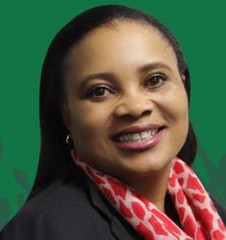
*Phuthi Mabelebele is Chief Director for the Rights of Persons With Disabilities at the Department of Women, Youth and Persons with Disabilities.