South Africa’s food system is a complex landscape where high levels of production coexist with severe food insecurity. In a 2024 survey, 63.5% of households were found to be food insecure and 28.8% of children stunted.
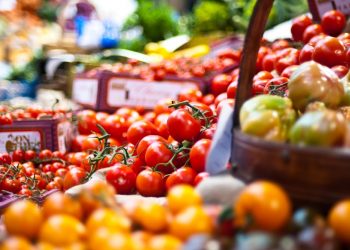
In this food system, fresh produce markets owned by municipalities are critical for food access and nutrition. The Agriculture Department reported that in 2023, the country’s 17 main municipal fresh produce markets sold over 3 million tons of fresh fruit and vegetables, worth R24.6 billion (US$1.37 billion). This is approximately 40%-50% of the fresh produce from farmers in South Africa.
The relationship between public markets and the informal sector, in particular, is fundamental to food security. Studies being carried out with support from the DSTI-NRF Centre of Excellence in Food Security in South Africa confirm that fresh produce sold by street traders who source from municipal markets is consistently cheaper than in formal supermarkets.
By selling at low prices in convenient locations, informal traders reduce the cost of food and the need for transport when shopping. They are key to making fruit and vegetables physically and economically accessible to the urban poor.
But this food system is under threat. Our research found that supermarket chains are buying more produce directly from farmers. Corroborated by the Competition Commission, there has been a steady decline in the share of national produce distributed through municipal markets.
We are social scientists who have been doing research on urban food systems in South Africa for the last seven years. We carried out research at the Johannesburg fresh produce market to better understand its role in food security.
We studied the market over three years, making observations during many visits and interviewing over 120 people in different roles. The market traces its origins back to Market Square in Johannesburg in the late 1800s, and is now the biggest of South Africa’s municipal markets.
It serves South Africa’s economic hub of Gauteng as well as selling some produce to other parts of the country and to neighbouring countries. The produce comes from the largest commercial operations and from small-scale farmers – anyone can sell there if they wish to.
The study provided clear evidence that the market is essential infrastructure for a more resilient, equitable and food-secure future.
To safeguard the role of markets like this, a concerted effort to protect and invest in them is required.
Johannesburg fresh produce market
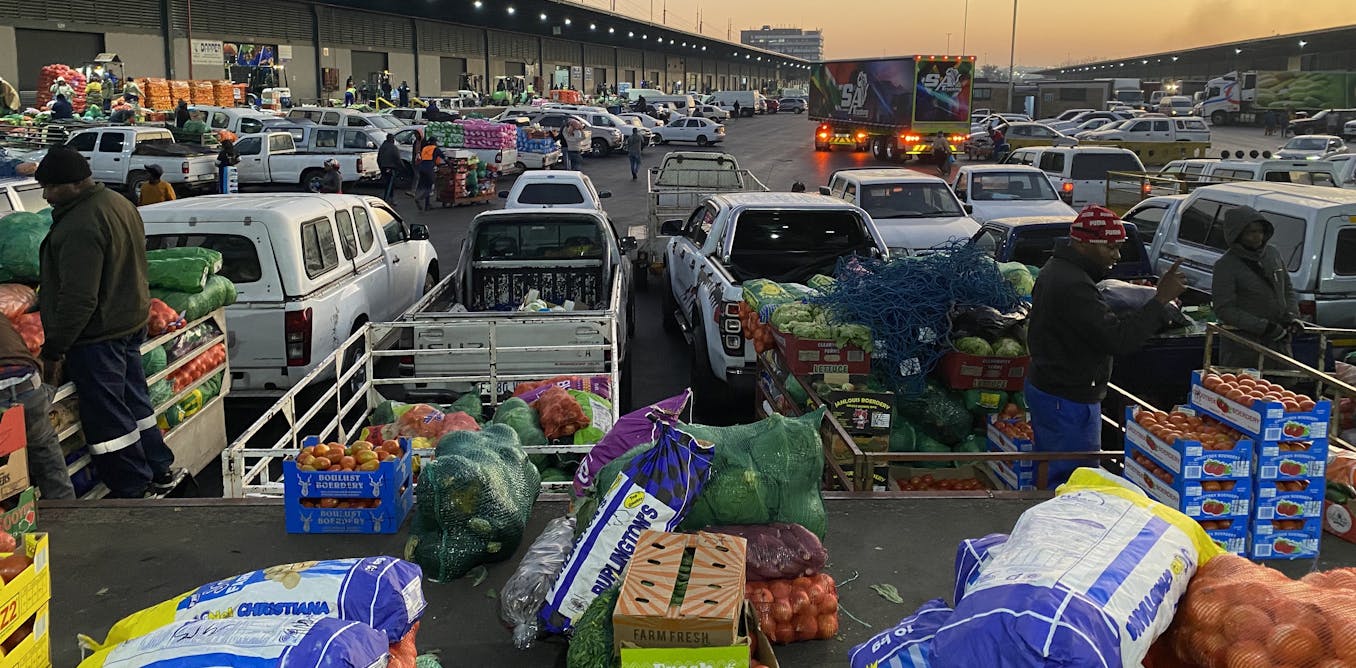
The Johannesburg fresh produce market accounts for around 45% of the total value of sales from the National Fresh Produce Markets. Its annual sales exceed 1.3 million tons, valued at over R11 billion (more than US$610 million).
The City of Johannesburg Metropolitan Municipality owns the property, and a state-owned company manages the operations and staff. Buyers and sellers have to register with the market to buy or sell through agents in the main trading hubs. All that’s required is a form of identity document.
All transactions in the main hubs go through agents and the market system, crediting or debiting the accounts of the sellers or buyers. The agents are registered and insured with the Agricultural Products Agents Council.
The majority of the agents are white men. Some come from families that have been agents in the market for generations. The continuity of these agents provides stability in the market. However, it also leaves the demographics little changed from the apartheid era.
Farmers send their produce to particular agents who then sell it for them, making their money from a commission on sales that is normally 7.5%. The market gets a 5% commission on all sales, which is how it covers operating costs. Anyone can also buy for cash, without registering, at the Unity or Tshiamo (formerly Mandela) markets that are on the same site.
Traders in these cash markets source produce from the main hubs, benefiting from the bulk prices and then breaking bulk to sell on in smaller quantities.
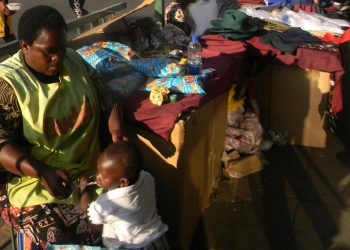
The most visible and profound impact of the Johannesburg fresh produce market is in its role as the primary source of stock for the vast informal retail sector. Thousands of the over 10,000 registered buyers stream through its halls every day, the vast majority being informal traders – street vendors, hawkers and small-scale retailers who form the backbone of fresh produce access in low-income neighbourhoods.
Read more:
Street traders in South Africa play a vital role: how their rights can be protected
These traders rely on the market’s competitive wholesale prices. They buy in bulk from the main market hubs or in smaller quantities from the traders who break bulk at the Unity and Tshiamo markets.
In turn, they sell to the people of Johannesburg and wider Gauteng Province.
Benefits and challenges
The regulated agent system, while imperfect, ensures that farmers receive payment within five days and provides a competitive marketplace.
The National Fresh Produce Markets uphold a level of competition and choice. Without them, all farmers, large and small, would be in a weaker negotiating position when selling into supermarket supply chains.
As the Competition Commission South Africa concluded in a 2025 report, selling to independent retailers through the National Fresh Produce Markets helps to counter the downward pressure on farm gate prices exerted by powerful buyers.
But there are challenges. Despite their proven value, the future of markets like the Johannesburg fresh produce market is under threat from a confluence of challenges:
-
loss of market share: large supermarket chains are increasingly buying directly from farmers through their own supply chains
-
decaying infrastructure: market agents and traders report issues with overcrowded, poorly insulated halls and unreliable cold storage made worse by electricity cuts. These problems increase operational costs and risk spoilage, threatening the market’s competitiveness.
Other challenges include the dominance of white, male market agents and the entrenched, ethnically based networks that facilitate trade. These present a barrier to more equitable participation. Lastly, unstable municipal politics is also affecting the market.
Protecting the municipal markets
We suggest three ways to protect markets such as the Johannesburg fresh produce market.
First, modernise infrastructure, particularly cold storage, to reduce food waste and maintain the quality of perishable goods. The city may have to increase capital expenditure. Revenues generated by the market should be ring-fenced for reinvestment in its infrastructure and services.
Second, insulate market management from municipal politics. Operational efficiency and long-term planning are essential for stability.
Finally, foster inclusivity and transformation without disrupting the social networks that underpin the market’s functioning. This could include facilitating more interaction between all farmers and agents, and supporting groups like the women’s trader collectives, which share information and buy in bulk.
Makhanana Malungane, an economic researcher at the Gauteng Department of Economic Development, contributed to this article.
Marc Wegerif receives funding from the DSTI-NRF Centre of Excellence in Food Security. They funded the research that informs this article.
Marc Wegerif is a Principal Investigator on the DSTI-NRF Centre of Excellence in Food Security